Start with a baseline.
Document current energy use, idle time, waste, and output before adding a new system. Without a baseline, savings claims cannot be checked.
 Future AI
A public efficiency campaign
America should get more useful work from every watt.
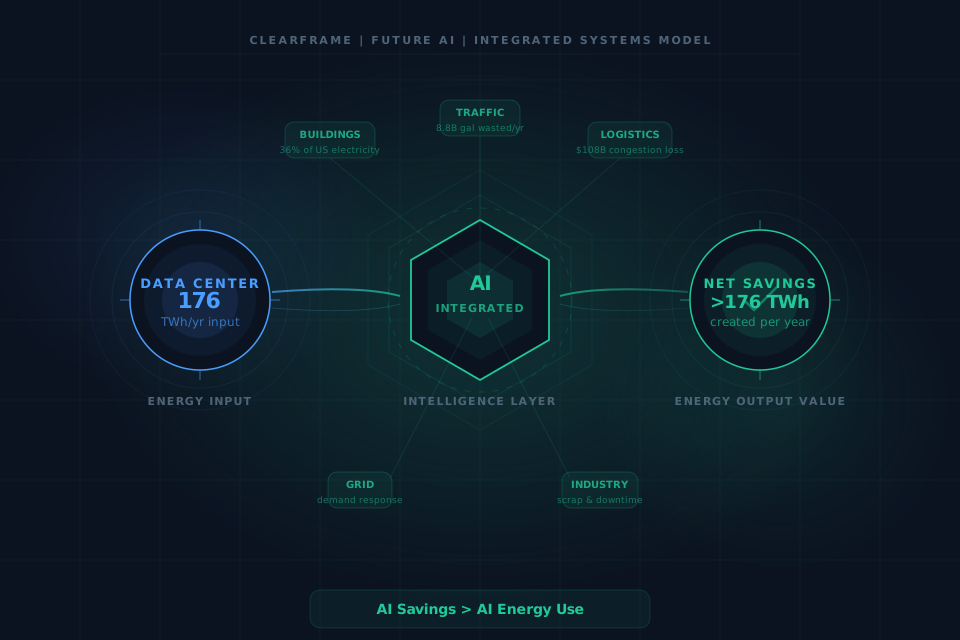
AI adds load to the grid. It can also reduce waste across buildings, traffic, logistics, manufacturing, and public systems. The useful question is whether the savings are measured and larger than the cost.
The case
Document current energy use, idle time, waste, and output before adding a new system. Without a baseline, savings claims cannot be checked.
A more efficient process can still consume more when activity grows. Measure the full operation, not one improved task.
Report the added computing load and the verified savings in the same place. A net-benefit claim should be inspectable.
Scenario tool
This is an arithmetic model, not a forecast. Adjust the facility load and the verified efficiency gain to see the scale of the claim that would need evidence.
Annual offset = facility load x 8,760 hours x verified gain.
Where to aim it

Heating, cooling, lighting, and equipment schedules that respond to actual use.

Signals, routing, and fleet operations measured against delay, fuel, and throughput.

Maintenance, yield, scrap, and idle equipment measured against real production.

Demand response, forecasting, and load coordination tied to system reliability.
A simple public standard
Primary sources
Follow the work
No content schedule. Just new evidence, a meaningful project update, or a public brief.