Count the load.
Electricity, equipment, integration, and staff time.
 Future AI
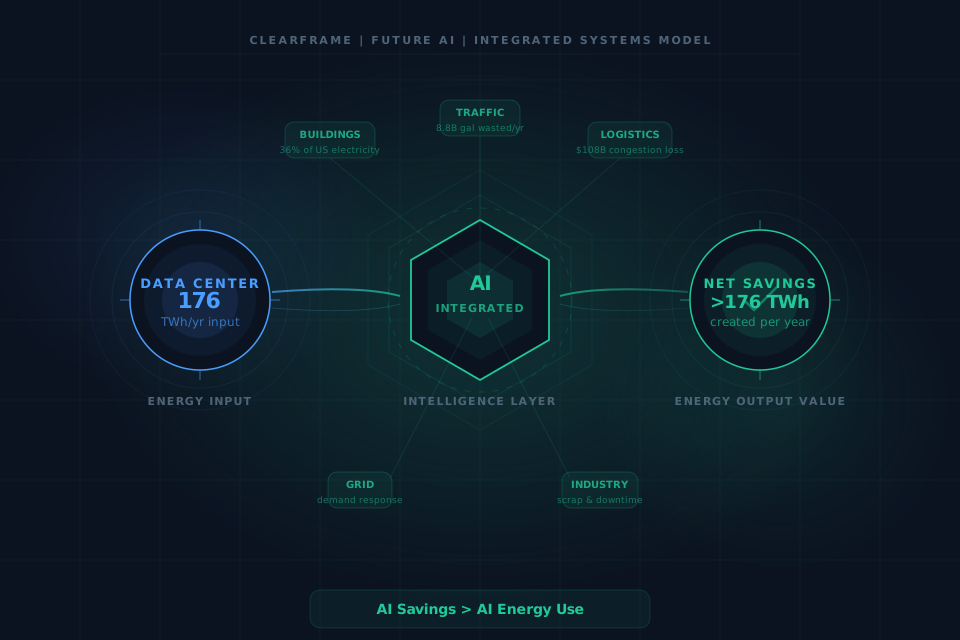
Future AI brief
Count the added load. Count the savings. Publish the net result.
The case
If measured savings do not exceed the added cost, the project fails the test.
Electricity, equipment, integration, and staff time.
Energy, delay, waste, downtime, and avoided loss.
Show the baseline, period, method, and result.
Good targets
Pick systems with records, a baseline, and money already being lost.

Match heating, cooling, and lighting to actual use.

Reduce delay, idle time, and wasted miles.

Cut scrap, idle equipment, and predictable failures.

Forecast demand, coordinate load, and find faults.
Before you buy
No baseline means no verified result.
Sources
The brief uses public reports from energy and standards agencies.
U.S. data center electricity use in 2023.
DOE projection for 2028.